

Al-Kabina — From the Ruins of Destruction to Home
Al-Kabina — From the Ruins of Destruction to Home
In the northern countryside of Latakia, amid rugged mountains and difficult terrain, lies the village of Al-Kabina. A small village in Jabal al-Akrad, it played a key role in the revolution’s victories and in defeating Assad. In retaliation, he turned destruction and ruin into its defining reality, until it became one of the areas hit hardest by the crimes of the fallen regime.
Al-Kabina’s location: a source of resilience and a target for aggressors
Al-Kabina’s strategic location made it a pillar of the revolution’s success and a strong fortress shielding the revolutionaries behind it. Overlooking the countryside of Hama, Latakia, and Idlib, and serving as a gateway to northern Syria (the liberated areas before the fall of Assad’s regime in 2024), the village helped protect families and residents in those regions from the former regime’s attempts to seize their land and drive them from it.
For all these reasons, the regime and its allies unleashed their full fury on Al-Kabina. Its importance made it a prize they coveted, and its unexpected resilience drove the oppressors to adopt a scorched-earth policy there, hoping to break the people’s backs and crush their resolve.
Al-Kabina and the scorched-earth policy
The fallen regime launched campaign after campaign against Al-Kabina, following one bombardment with another. Its first major assault on the village came in 2016, when the escalation continued for many days. Assad’s regime tried with all its might to burn the village and everything in it, but it failed. It tried again in 2019, this time even more brutally and violently, using every kind of weapon against Al-Kabina, launching hundreds of airstrikes, explosive barrel bombs, and other deadly weapons.
From 2019 until Assad’s fall in 2024, the escalation against Al-Kabina never stopped. The village knew no lasting peace, and the bombing never truly let up.
What does the destruction in Al-Kabina look like?
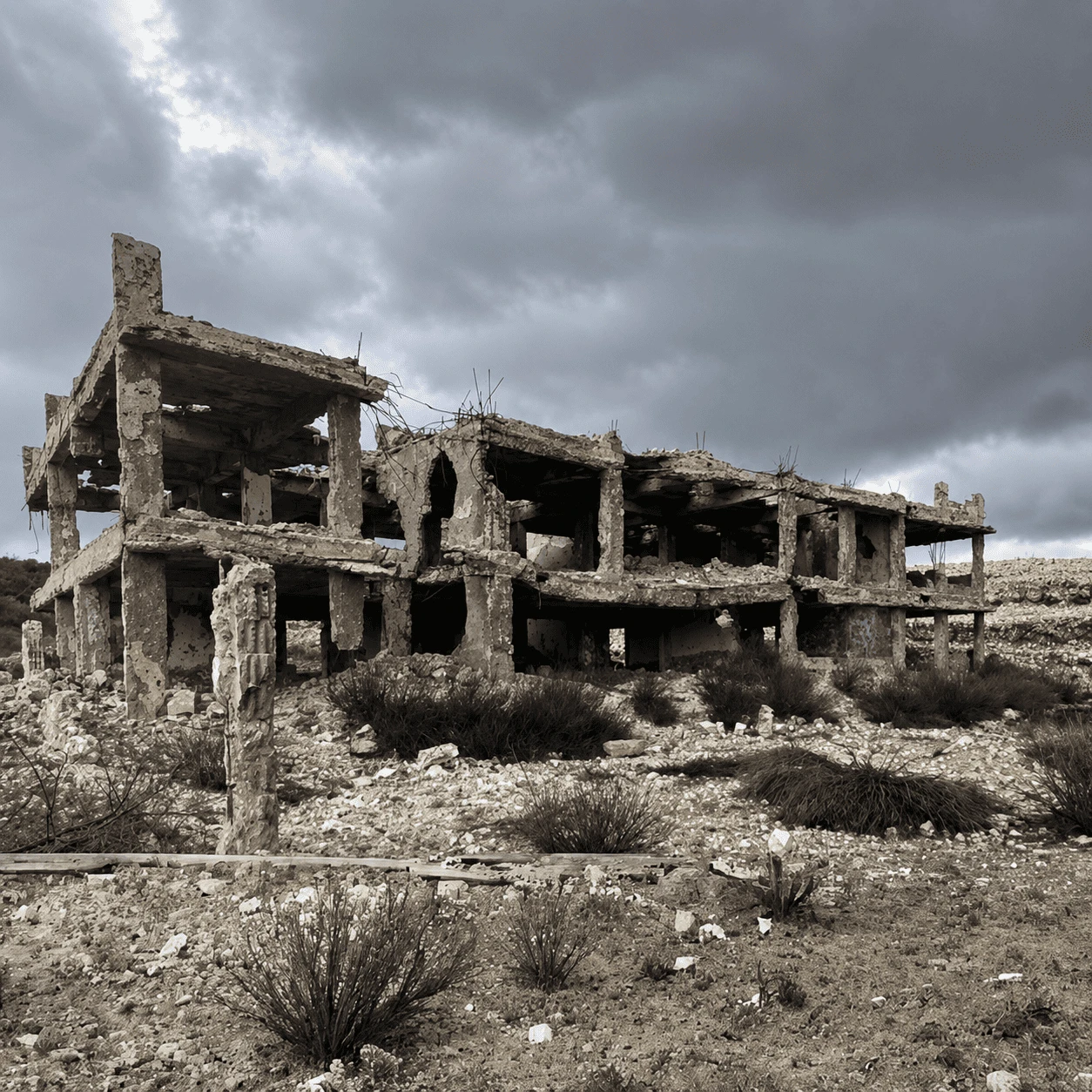
Reports indicate that 95% of Al-Kabina has been destroyed, and that estimate is hardly surprising. After years of shelling, airstrikes, barrel bombs, and the scorched-earth policy the tyrant used in an attempt to defeat our revolution, such devastation was inevitable. The fierce campaigns launched by the fallen regime left no stone upon another in the village. They left no home fit to live in, no paved road for travelers, no mosque, no health center, and no sign of life at all—turning the road back to the village into a dead end.
Is there any way back to Al-Kabina?
After Assad’s regime forcibly displaced the people of Al-Kabina, families fled to the camps, enduring for more than a decade the bitterness of tent life and the hardships that came with it: winter storms and devastating floods, summer heat and blazing conditions. Then, after liberation, some families tried to return to Al-Kabina, but the complete lack of basic means of survival stood in their way and left them with only two choices: either go back to the camps they could no longer bear, or pitch the tents they had brought with them in front of their destroyed homes in a village with no water, no electricity, and a severe lack of essential services.
Molham Team — Al-Kabina Response Campaign
With the village stripped of every sign of life, its people’s hearts set on returning, and hardships continuing to mount, we at Molham Volunteering Team had to launch the Al-Kabina Response Campaign—to repay its debt to us and stand by its people. We will restore roads, homes, and mosques, repair infrastructure, and help displaced families return, so the village can once again be vibrant with life and filled with its people.
Campaign donation link: https://molh.am/UUEo4S